// Automotive occupant restraint components & OEM supply

Seat Belt OEM Supplier Send Enquiry

B2B  /  Automotive Safety Components

Reliable Seat Belt Solutions for Automotive & OEM Applications

Seat Belt OEM Supplier works with automotive businesses that need occupant restraint components matched to a defined application — assemblies, retractors, buckles, webbing and anchorage hardware, selected against the requirement rather than pulled off a shelf.

Component Scope
Assemblies · Retractors · Buckles · Webbing · Anchorage
Engagement Model
Requirement-led B2B enquiry & supply
Primary Focus
Application compatibility & supply consistency
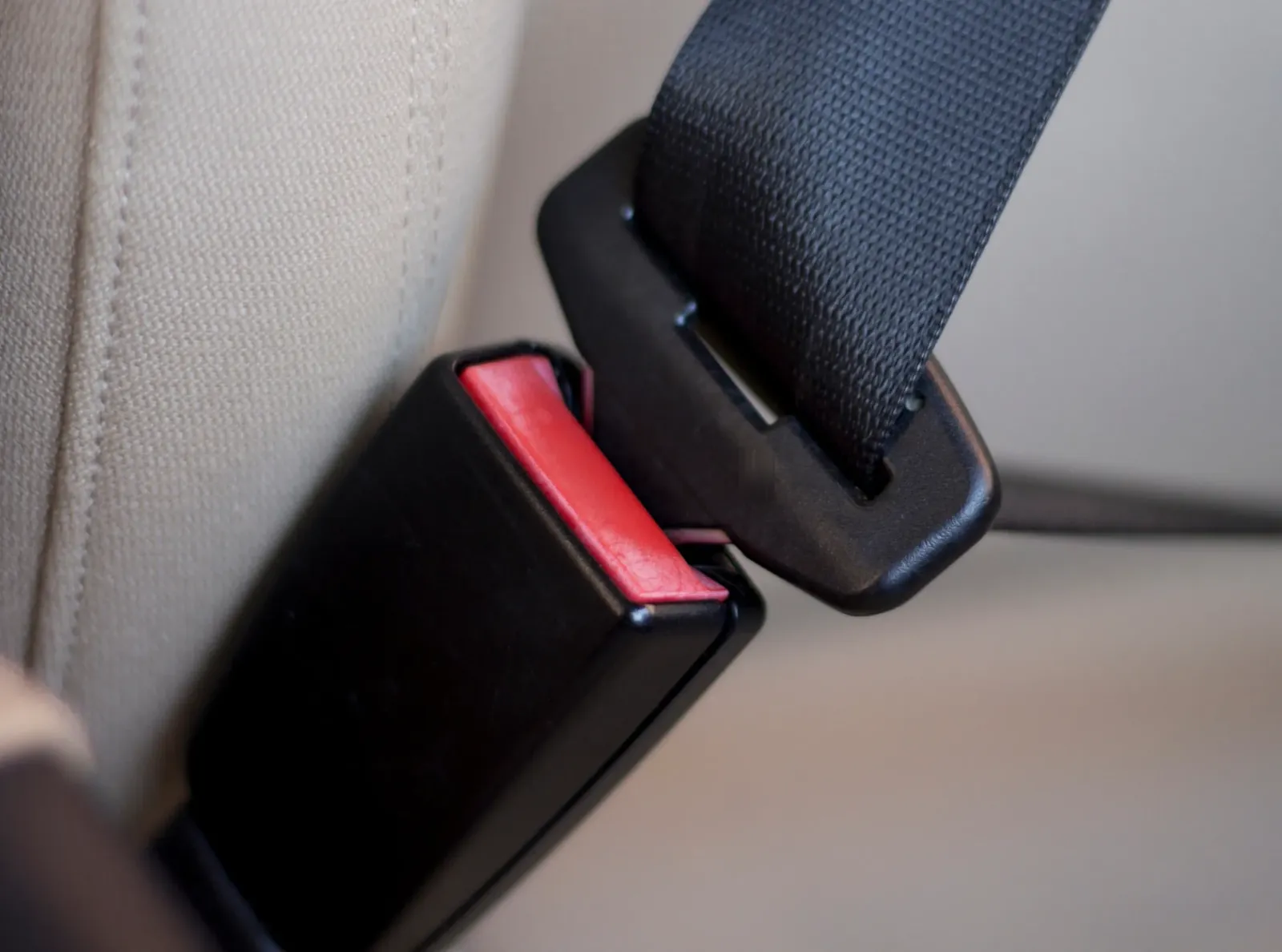
Close-up of an automotive seat belt buckle with the metal webbing tongue latched into the buckle body beside a vehicle seat.
Ref. 001

Seat belt buckle assemblyComponent view

Application-matched selection Component-level supply Documented enquiry process Consistency across repeat supply
Occupant Restraint Engineering

A Seat Belt Is a System, Not a Single Part

Every element in the belt path influences how the assembly behaves in service — which is why component selection sits at the centre of what we do.

A seat belt performs one job: it keeps an occupant located in the seat and manages how they move during a sudden change in vehicle motion. That job is shared across several parts — the webbing that carries the load, the retractor that stores and pays out the belt, the tongue and buckle that form the latch, and the anchorages that transfer load into the vehicle structure.

Because those parts work as one path, a change to any of them affects the rest. Webbing width has to suit the tongue. The tongue has to suit the buckle. Mounting hardware has to suit the anchorage points designed into the vehicle. Substituting a part in isolation is where compatibility problems usually begin.

Vehicle manufacturers and their suppliers therefore treat restraint components as application-specific items. The same nominal part can be right for one seating position and wrong for another, because the geometry, the routing and the mounting arrangement differ.

Our role is to sit on the supply side of that conversation: to understand what the application actually needs, identify components that suit it, and keep what is supplied consistent from one batch to the next.
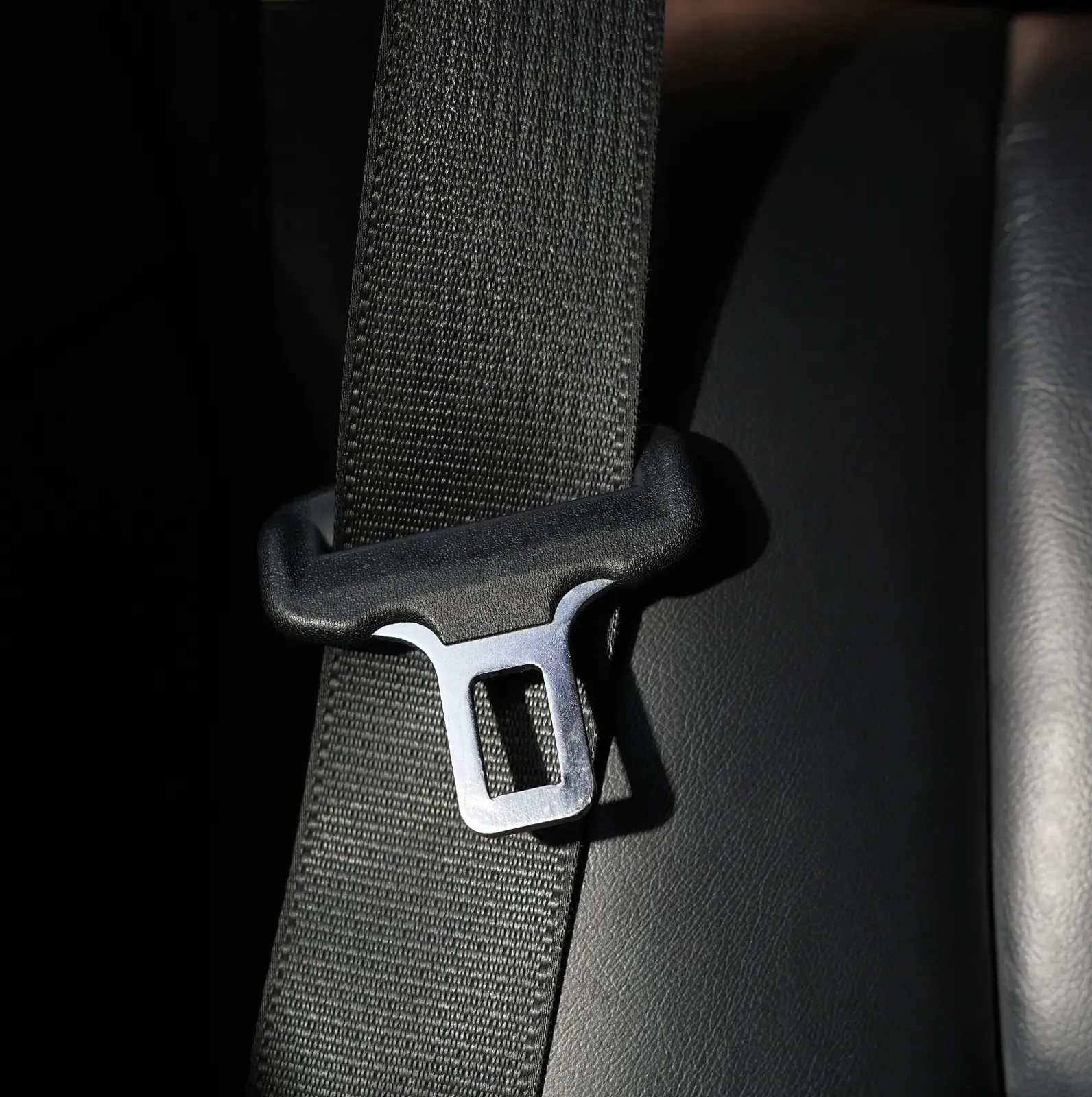
Woven black seat belt webbing running into a steel tongue plate seated inside the buckle housing on a dark vehicle seat.
Webbing & tongue interface
P.01

Restraint Geometry

Where the belt sits on the occupant is determined by anchorage positions and belt routing. Geometry is set by the vehicle and seating position, so components have to be chosen to suit it rather than the other way round.

P.02

Component Interdependence

Webbing, tongue, buckle, retractor and mounting hardware form a single load path. Each interface has to match the next, which makes assembly-level thinking more useful than part-by-part substitution.

P.03

Consistency Over Time

For a business fitting or assembling in volume, the useful property of a supplier is repeatability — the same component, to the same description, on the next order and the one after that.

P.04

Application-Led Selection

Vehicle type, seating position, mounting arrangement and the applicable requirements for that application all narrow the field. Sharing those details early is what makes a supply conversation productive.

03 Component Architecture

Seat Belt Components We Supply

The categories below describe the parts of a restraint system a supply enquiry usually covers. Availability for any given application depends on the requirement, so treat each as a starting point for a technical conversation.

MOD / 01

Seat Belt Assemblies

Complete belt assemblies supplied as a matched set — webbing, tongue, buckle, retractor and mounting hardware selected to work together for a stated seating position and mounting arrangement. Assembly-level supply removes most of the interface guesswork that comes with sourcing parts separately.

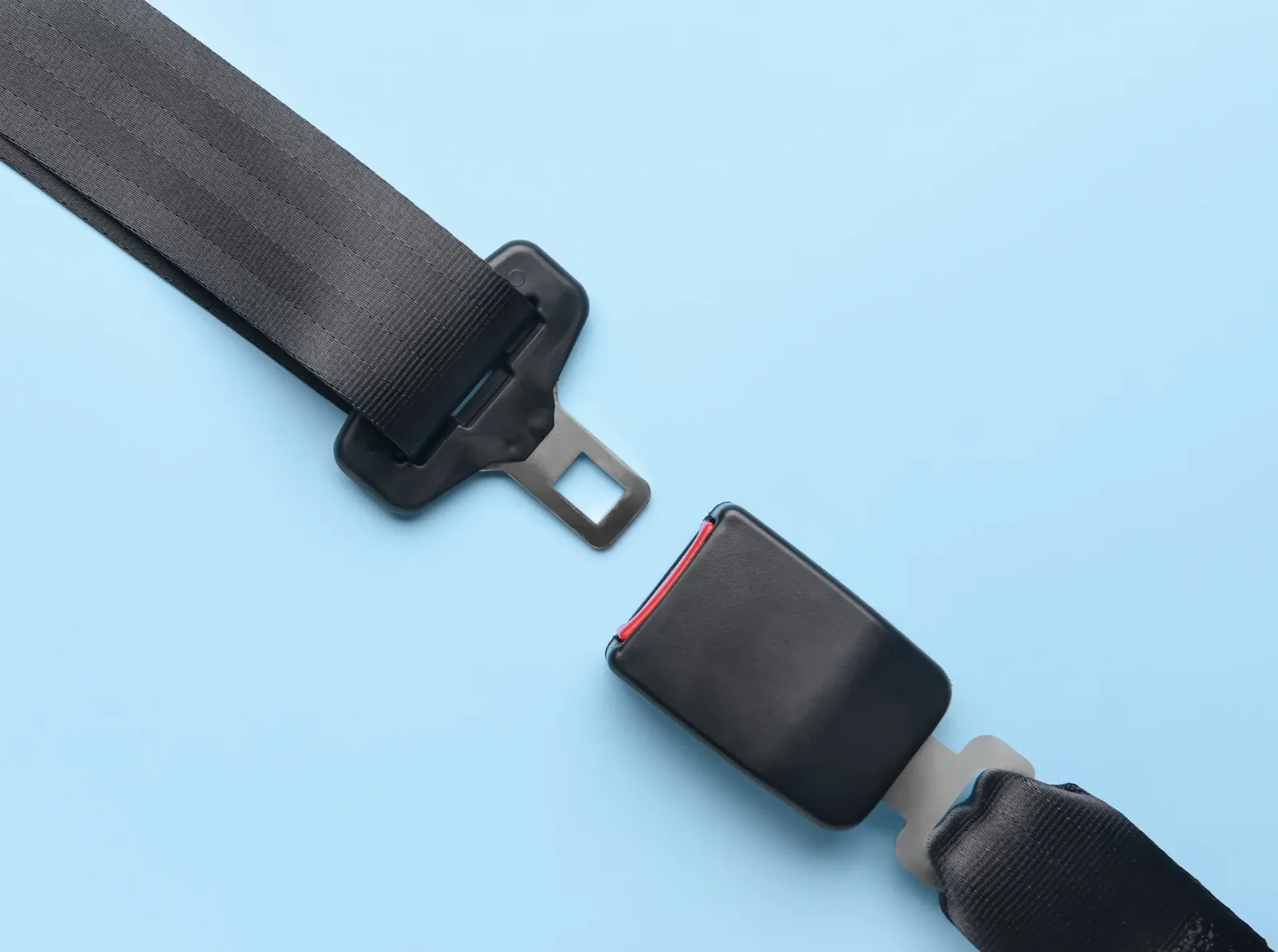
Seat belt buckle and webbing tongue shown as separate components against a plain light background. Component study

MOD / 02

Retractor Systems

Retractors store the belt and control how webbing is paid out and taken up. Selection depends on the mounting arrangement, the belt path and the retractor type suited to that seating position.

MOD / 03

Buckles & Tongues

The latch interface. Tongue plate geometry and buckle type have to correspond, which makes these two parts a common source of compatibility questions when sourced independently.

MOD / 04

Seat Belt Webbing

The woven strap that carries load across the occupant. Width and construction have to suit the tongue, the retractor and the routing used in the application.

MOD / 05

Anchorage & Mounting Hardware

The parts that transfer belt load into the vehicle structure. Bolt specification, plate geometry and the anchorage points designed into the vehicle all govern what is appropriate here.

MOD / 06

Related Safety Components

Supporting items associated with belt installation and routing — guides, covers, trims and fixings — supplied where they form part of the stated requirement.

MOD / 07

OEM Supply Solutions

Requirement-led supply for automotive businesses — understanding the application, identifying suitable components and keeping supply consistent across orders.

04 OEM Supply Approach

How an Enquiry Moves From Requirement to Supply

The sequence below describes how we work with an automotive business through a component enquiry. It is a coordination and procurement process — the value sits in getting the requirement right before anything is quoted.

01

Requirement Understanding

We start with the application: vehicle type, seating position, what is being replaced or fitted, and the quantities involved.

02

Application Review

Mounting arrangement, belt routing and the interfaces that matter are reviewed against the details and references you provide.

03

Product Selection

Suitable components or a matched assembly are identified, with the reasoning behind the selection set out clearly.

04

Technical Coordination

Open points — interfaces, hardware, references, documentation you require — are resolved before an order is confirmed.

05

Supply Planning

Quantities, phasing and repeat requirements are agreed so that ongoing supply is predictable rather than reactive.

06

Ongoing Communication

A single point of contact stays with the account, so the next order starts from what was agreed on the last one.

Note: this describes a procurement and coordination process. Where an application calls for design work, validation, testing or certification, those activities sit with the parties qualified and appointed to carry them out.

05 Automotive Applications

Where These Components Are Used

Requirements differ across vehicle categories because architecture, seating layout, duty cycle and the applicable regulations differ. The matrix indicates the application areas an enquiry commonly falls into.

Driver seated at the wheel of a passenger car with the shoulder belt fastened across the torso.

Passenger vehicle cabin — three-point belt in the driver position

APP / 01

Passenger Vehicles

Cars and utility vehicles, front and rear seating positions, where belt geometry is set by the body structure and seat design.

APP / 02

Commercial Vehicles

Goods and passenger-carrying vehicles where cabin layout, seat mounting and duty cycle influence what is appropriate.

APP / 03

Industrial & Utility Vehicles

Off-highway and site vehicles, where seat mounting and operating conditions differ noticeably from road-going cars.

APP / 04

Vehicle Assembly & Fit-Out

Build, body-building and fit-out operations that need belt components supplied consistently against a defined specification.

06 Why Seat Belt Systems Matter

The Belt Path, Read as a Load Path

A three-point belt is the arrangement most road vehicles use. Reading it as a load path — from the occupant, through the webbing, into the vehicle structure — makes it clear why each interface has to be right.

Schematic of a three-point seat belt arrangement Simplified side view of a vehicle seat showing an upper anchorage, a retractor, a buckle and a lower anchorage, with the shoulder section and lap section of the belt marked between them. FLOOR REFERENCE PILLAR A UPPER ANCHORAGE B RETRACTOR C BUCKLE & TONGUE D LOWER ANCHORAGE SHOULDER SECTION LAP SECTION SEAT DATUM

Fig. 06 — indicative schematic, not to scale

A
Upper AnchorageSets where the shoulder section crosses the occupant. Its position is designed into the vehicle, which is why belt components have to suit the vehicle rather than be adapted to it.
B
RetractorStores the webbing and governs how it is paid out and taken up. Mounting arrangement and belt path determine which retractor type is appropriate.
C
Buckle & TongueThe latch that divides the shoulder and lap sections. Tongue plate geometry and buckle type must correspond, and the release must remain accessible in use.
D
Lower AnchorageTransfers lap-section load into the vehicle structure through the mounting hardware and the anchorage point provided for it.

Points Worth Keeping in View

  • A belt only does its job when it is worn correctly, positioned as intended for that seating position, and not routed around or behind the occupant.
  • Installation should follow the vehicle manufacturer's requirements and be carried out by people competent to do it. Anchorage points and fixings are not interchangeable by assumption.
  • Webbing that is cut, frayed, chemically contaminated or visibly damaged, and hardware that does not latch or release cleanly, should be assessed rather than left in service.
  • Requirements applicable to a vehicle and its market govern what may be fitted. Those requirements should be established for the specific application before components are ordered.
07 Start an Enquiry

Looking for a Seat Belt Solution for Your Automotive Application?

Tell us the vehicle, the seating position and what you are fitting or replacing. The more specific the application detail, the more useful our first response can be.